
Taraweeh Prayer: Meaning, Virtues, and How to Perform It – A Complete Guide
Taraweeh Prayer: Meaning, Benefits, and Step-by-Step Guide

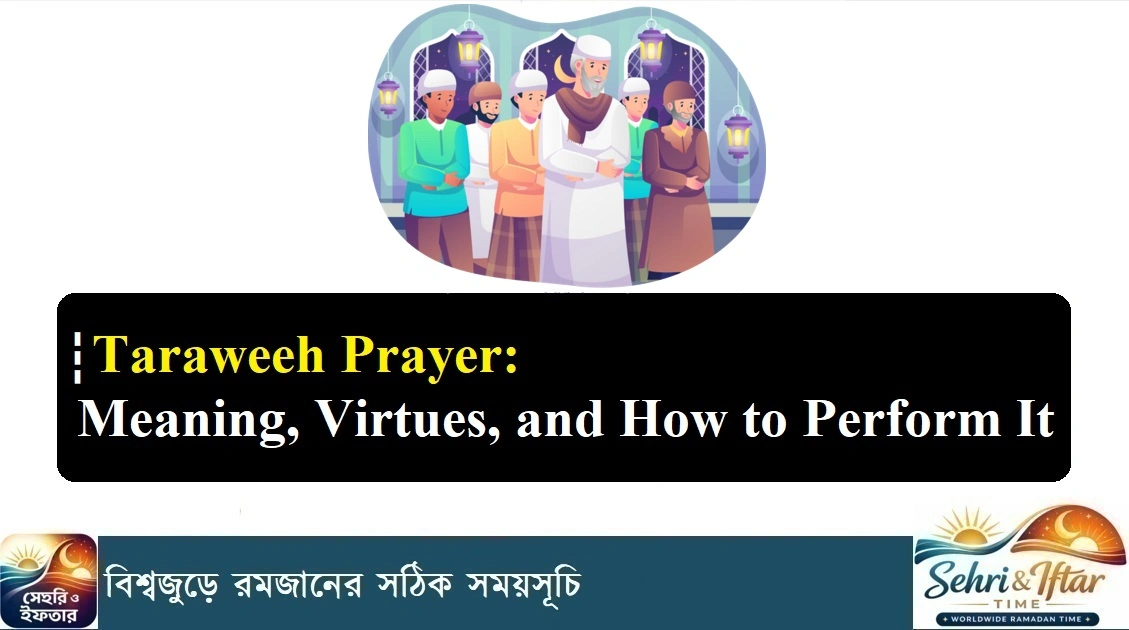
Taraweeh Prayer: Meaning, Virtues, and How to Perform It – A Complete Guide
Ramadan is a month unlike any other. It is a time when Muslims around the world dedicate themselves to fasting, prayer, charity, and seeking closeness to Allah. Among the many acts of worship associated with this blessed month, Taraweeh prayer holds a special place in the hearts of believers. Every night after the Isha prayer, mosques fill with worshippers standing shoulder to shoulder, listening to the recitation of the Quran and engaging in one of Ramadan’s most beloved traditions.
Taraweeh is much more than an additional prayer. It is a spiritual journey that strengthens faith, purifies the heart, and allows Muslims to experience the beauty of Ramadan on a deeper level. Understanding its meaning, virtues, and proper method can help believers gain maximum benefit from this remarkable act of worship.
What Is Taraweeh Prayer?
The word “Taraweeh” comes from the Arabic word tarweeha, meaning “rest” or “relaxation.” The prayer received this name because worshippers traditionally took short breaks after every few units (rak’ahs) due to the length of the recitation.
Taraweeh is a voluntary night prayer performed exclusively during the month of Ramadan after the obligatory Isha prayer. Although it is not compulsory, it is a highly recommended Sunnah that was practiced and encouraged by Prophet Muhammad (peace be upon him).
The Prophet (peace be upon him) occasionally led Taraweeh in congregation and encouraged Muslims to perform night prayers during Ramadan. However, he avoided making it obligatory upon the Muslim community.
The Importance of Taraweeh in Islam
Taraweeh occupies a unique position because it combines several acts of worship into one experience. During Taraweeh, Muslims stand in prayer, listen to the Quran, remember Allah, and seek forgiveness simultaneously.
The Prophet Muhammad (peace be upon him) said:
“Whoever stands in prayer during Ramadan with faith and hoping for reward will have all of his previous sins forgiven.”
This powerful promise highlights the immense spiritual value of Taraweeh. It is not simply about performing extra prayers; it is about seeking Allah’s mercy and purification.
For many Muslims, Taraweeh becomes one of the most cherished moments of Ramadan because it creates a deep sense of peace, reflection, and connection with Allah.
Virtues and Benefits of Taraweeh Prayer
Strengthens Faith
One of the greatest benefits of Taraweeh is the strengthening of faith. Standing before Allah night after night develops sincerity, humility, and devotion.
As Muslims listen to the Quran being recited, they are reminded of Allah’s guidance, mercy, and promises. This strengthens spiritual awareness and encourages positive change.
Opportunity for Forgiveness
Ramadan is known as the month of forgiveness, and Taraweeh is one of the greatest means of attaining it. Every bowing, prostration, and supplication becomes an opportunity to seek Allah’s mercy.
Many believers use Taraweeh as a chance to turn back to Allah, repent sincerely, and begin a new chapter in life.
Builds Discipline and Patience
Performing Taraweeh consistently throughout Ramadan requires commitment and dedication. After a long day of fasting, believers choose worship over comfort and sleep.
This develops discipline, patience, and self-control—qualities that remain valuable long after Ramadan ends.
Encourages Community Unity
One of the most beautiful aspects of Taraweeh is the sense of unity it creates. People from different backgrounds, ages, and professions gather together in the mosque with one purpose: worshipping Allah.
This strengthens brotherhood, compassion, and community bonds within the Muslim Ummah.
✅ You May Also Like: Laylat al-Qadr: Signs, Virtues, and Recommended Acts in Islam
How Many Rak’ahs Are in Taraweeh?
One common question concerns the number of rak’ahs in Taraweeh prayer.
Throughout Islamic history, different communities have practiced varying numbers of rak’ahs, including 8, 20, and sometimes more. Scholars have recognized these variations based on authentic traditions and historical practice.
The most important principle is not the number itself but the sincerity, concentration, and devotion with which the prayer is performed.
Whether a person prays 8 or 20 rak’ahs, the goal remains the same: seeking Allah’s pleasure and reward.
How to Perform Taraweeh Prayer
Performing Taraweeh is straightforward and follows the same basic structure as other voluntary prayers.
Step 1: Pray Isha First
Taraweeh begins only after completing the obligatory Isha prayer.
Step 2: Pray in Sets of Two Rak’ahs
Taraweeh is generally performed in pairs of two rak’ahs. After every two rak’ahs, the worshipper concludes with Tasleem (saying السلام عليكم ورحمة الله).
Step 3: Recite the Quran
During Taraweeh, longer Quran recitations are often encouraged. In many mosques, the entire Quran is completed over the course of Ramadan.
However, individuals praying at home may recite any portions they know.
Step 4: Conclude with Witr Prayer
After completing Taraweeh, Muslims usually end the night with Witr prayer, which is highly recommended and serves as the final prayer of the night.
Can Taraweeh Be Prayed at Home?
Yes. Although praying Taraweeh in congregation at the mosque carries special rewards and community benefits, it can also be performed at home.
Many Muslims pray Taraweeh individually or with family members, especially when attending the mosque is difficult. Allah rewards sincerity regardless of location.
Making the Most of Taraweeh
To maximize the benefits of Taraweeh:
- Pray with concentration and humility.
- Reflect on the meanings of Quranic verses.
- Make sincere dua before and after prayer.
- Seek forgiveness and repentance.
- Remain consistent throughout Ramadan.
The quality of worship is often more important than the quantity.
Conclusion
Taraweeh prayer is one of Ramadan’s greatest gifts. It offers believers a unique opportunity to strengthen faith, seek forgiveness, connect with the Quran, and draw closer to Allah.
Whether performed in a mosque filled with worshippers or quietly at home, Taraweeh has the power to transform hearts and elevate spirituality. It is not merely a nightly routine but a sacred journey of devotion and self-improvement.
As Ramadan arrives each year, Muslims should embrace Taraweeh with enthusiasm and gratitude, recognizing it as a precious opportunity that may not come again. Through sincere prayer, reflection, and dedication, Taraweeh can become one of the most rewarding experiences of a believer’s life and a means of attaining Allah’s mercy and eternal success.